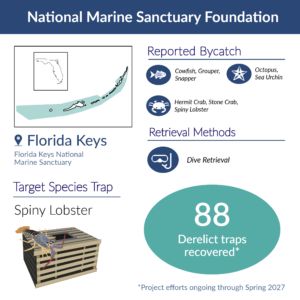
 The National Marine Sanctuary Foundation (the Foundation) is a nationwide organization and the official non-profit partner of NOAA’s Office of National Marine Sanctuaries, supporting its system of 18 marine environments across the country, from Massachusetts to American Samoa and the Great Lakes to the Florida Keys. Their unique marine debris collaboration with Florida Keys National Marine Sanctuary is known as Goal: Clean Seas Florida Keys. This initiative removes marine debris from the sanctuary’s waters while involving local divers, tourists, students, and artists—improving marine habitats and educating the community at the same time!
The Goal: Clean Seas initiative fills a crucial gap in the derelict trap removal effort, picking up often buoy-less traps in deeper coastal zones. They work with dive shops to conduct removals in up to 130 feet-deep waters using SCUBA equipment and lift bags. Last year, as partners of the National TRAP Program, the National Marine Sanctuary Foundation removed 293 traps from the Florida Keys’ waters throughout the closed fishing season. This year, as a returning partner, they concentrated their removal efforts as part of a three-day trash derby event in May. With condensed and early removals, they were able to increase efficiency, improve organization, and pick up as many traps as possible before storms start moving them around and cause additional damage to coral reefs, seagrass beds, and hard bottom marine ecosystems. The dive teams collected 88 traps, and plan to take part again in the next derby in the spring of 2027.
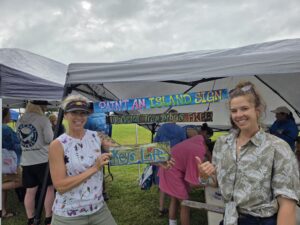
The Goal: Clean Seas collaboration is able to reach such success in their removals thanks to their partnerships with 14 Florida Keys dive shops. Working with recreational divers is a deeply important aspect of the initiative—each shop engages their own community of locals and visitors who appreciate the opportunity to give back to the reefs that they love. This, in turn, creates a new path for the tourism industry in the Keys. Carrying out their removals with the trash derby this year gave cause for even greater community involvement. Certified recreational divers could participate in the debris clearing on dive shop team boats, and other community members were able to take part in the festival.
As National TRAP Program partners, the National Marine Sanctuary Foundation collects data from all of their retrievals. This year, they created an open-source information resource with their TRAP Program retrieval data and past debris collection data. Cortney Benson, the Foundation’s Marine Debris Removal Stewardship Coordinator, emphasized how important this development is to their greater involvement with the marine debris removal cause. “Being a source of information allows us to contribute to anyone else’s research and decision making,” she said. They have already gotten data inquiries from resource managers interested in identifying accumulation zones of marine debris, students studying ecosystem damage and debris trends, and a non-profit seeking to better understand entanglement risk. With support from the National TRAP Program, for two years in a row the Foundation’s Goal: Clean Seas initiative has made impactful contributions to addressing and understanding the problem of derelict traps.