Article excerpts:
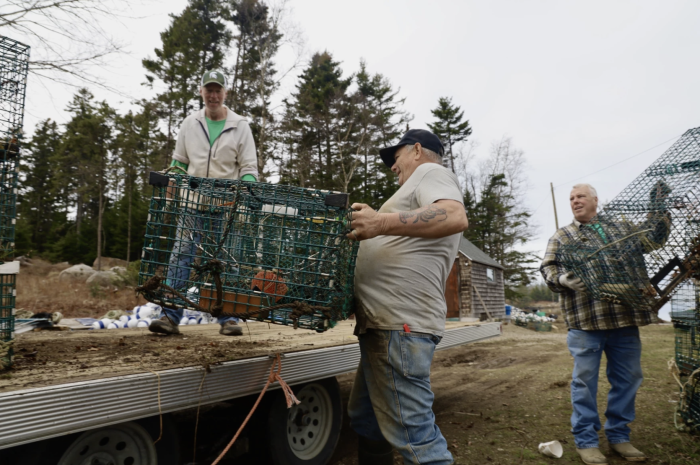
Buzz Scott’s non-profit, OceansWide, spends more than half the year on the water, training scuba divers to recover derelict, or “ghost gear,” from the seafloor. This past winter, he’s been working on shore, hauling thousands of abandoned traps piled around Vinalhaven.
Since January, OceansWide and the crew have processed and recycled nearly 5,400 traps — more than 170 tons — from Vinalhaven alone. Scott believes they’ve only scratched the surface.
“I think there’s 60,000 to 100,000 traps on this island that need to be processed and removed,” he said.
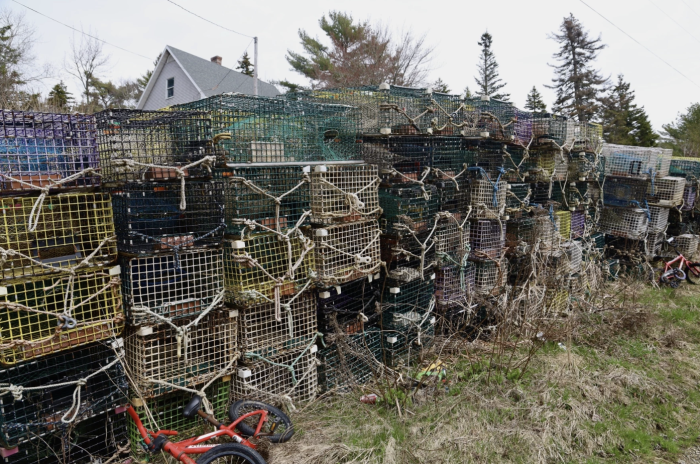
This is a common scene up and down Maine’s coast — battered wire fishing traps piled high in a front yard, tucked back in the woods, or strewn along the shore after a storm. Wire pots wrapped with polyvinyl plastic replaced wooden, biodegradable traps in the 1980s, and they’ve been piling up since, shedding microplastics and creating hazards for birds and other creatures.